
Throughput Engineering in Packaging Lines: Cases-Per-Minute, Line Balancing, and Bottleneck Control
What This Resource Covers & Why This Topic Matters
Packaging lines are rarely limited by the capability of a single machine. Instead, overall production output is determined by how well each piece of equipment operates in synchronization with the rest of the system. Even when individual machines are capable of high throughput, poorly balanced systems can significantly reduce the number of cases per minute (CPM) produced by the line.
In packaging environments, throughput is typically measured using cases per minute, boxes per minute, or units per minute. These metrics determine how efficiently products move through feeding systems, packaging machines, labeling stations, and palletizing operations. When machines operate at different speeds, the slowest step becomes the limiting factor that determines the throughput of the entire system.
For example, automated case sealing machines can process around 30 cases per minute, while manual sealing operations often achieve only 5–10 cases per minute depending on operator speed. When these processes exist within the same packaging line, the slower operation becomes the throughput bottleneck that limits the entire system.
Throughput engineering focuses on designing packaging lines so that machines operate within compatible cycle times and maintain consistent product flow — the underlying logic for identifying where automation delivers value in a packaging line.
Typical Equipment in This System
| Equipment | Typical Throughput Capability |
|---|---|
| Product feeding conveyors | 30–60 units per minute depending on product spacing |
| Case packers | ~15–30 cases per minute |
| Case sealers | ~25–30 cases per minute |
| Labeling systems | ~30–60 cases per minute |
| Robotic palletizers | ~15–25 cases per minute depending on pallet pattern |
| Manual case sealing | ~5–10 cases per minute |
These machines must be selected and configured so that their cases-per-minute capabilities align with the throughput target of the packaging line.
RBTX Learn Interpretation: What Throughput Engineering Looks Like on a Real Packaging Line
Throughput engineering becomes most visible when walking through a packaging line and examining how each station contributes to the final cases-per-minute output. Engineers rarely focus only on machine capability; they analyze how the slowest machine determines the throughput of the entire system.
Machine Cycle-Time Matching
Every packaging machine operates at a specific cycle time that determines how many cases per minute it can process. For example, if a robotic case packer runs at 25 cases per minute but a downstream palletizer can only stack 18 cases per minute, the palletizer becomes the limiting factor for the entire packaging system.
Packaging engineers therefore design lines around the slowest machine’s cases-per-minute capability, not the fastest machine’s specification.
Accumulation and Buffer Zones
Even when machines operate at similar speeds, temporary interruptions can disrupt throughput. Accumulation conveyors act as buffer zones that store products when machines briefly stop or slow down.
For example, a line designed to produce 25 cases per minute may include accumulation conveyors capable of storing several minutes of production. This buffer allows upstream machines to continue operating while downstream equipment recovers from short stoppages.
Boxes-Per-Minute System Design
Packaging lines are often engineered around a specific cases-per-minute target. For example, a production system may be designed to produce 20, 25, or 30 cases per minute depending on product demand and machine capability.
Every machine in the system—from feeding conveyors to palletizers—must support this throughput rate. If a robotic palletizer can only stack 18 cases per minute, the entire packaging line will ultimately be limited to that rate regardless of how fast upstream equipment operates.
Conveyor Spacing and Product Flow
Conveyors play a critical role in maintaining consistent cases-per-minute throughput. Products must arrive at packaging machines with consistent spacing — a function of how upstream and downstream packaging automation interact — so machines can complete each cycle without collisions or interruptions.
Sensors and PLC logic regulate product spacing so that packages arrive at each machine at exactly the right time. When spacing becomes inconsistent, machines may stop or slow down, reducing overall throughput.
Dynamic Line Control
Modern packaging systems often use centralized control systems to maintain consistent throughput across the line. PLCs and automation controllers monitor machine speeds and adjust conveyor operation dynamically.
If a downstream machine begins slowing down, upstream conveyors may automatically reduce speed to prevent product congestion. This dynamic control helps maintain stable cases-per-minute output across complex packaging systems.
Example Packaging Line Throughput Calculation
The throughput of a packaging line is determined by the slowest machine in the system.
| Station | Throughput Capability |
|---|---|
| Product feeding | 35 units per minute |
| Case packing | 25 cases per minute |
| Case sealing | 30 cases per minute |
| Labeling | 30 cases per minute |
| Palletizing | 20 cases per minute |
Packaging line throughput = 20 cases per minute
because the palletizer is the slowest station.
Even though upstream machines operate faster, the palletizer limits the overall system output.
Packaging Line Throughput Formula
Engineers often estimate packaging line capacity using a simple rule:
Packaging Line Throughput = Minimum Throughput of All Machines in the System
or
Line CPM = min (CPM₁, CPM₂, CPM₃, … CPMₙ)
Where each CPM value represents the cases-per-minute capability of a specific machine in the packaging line.
This formula reflects a fundamental principle of manufacturing systems: the slowest step determines the output of the entire process.
Implementation Reality Check
Designing packaging lines for optimal throughput requires more than selecting high-speed machines. Engineers must evaluate the entire system architecture, including machine cycle times, conveyor spacing, accumulation capacity, and product flow.
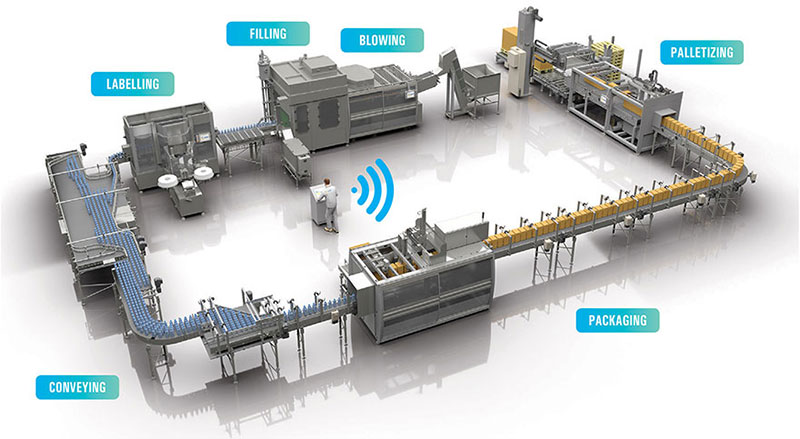
Short machine stoppages can also disrupt throughput. Without accumulation buffers, even minor interruptions can cause cascading slowdowns across the packaging line. For this reason, most packaging systems incorporate buffering zones that allow upstream equipment to continue operating while downstream machines recover.
Product variability can also influence cases-per-minute performance. Changes in product size, packaging format, or pallet patterns may alter machine cycle times and require adjustments to maintain system balance.
How RBTX Learn Recommends Using This Information
RBTX Learn recommends evaluating packaging automation projects using system-level throughput metrics rather than individual machine speeds. Identifying the slowest step in a packaging process often reveals the most effective opportunities for automation improvements.
Improving throughput may involve upgrading specific machines, introducing accumulation conveyors, or adjusting product spacing to stabilize flow across the packaging line. By focusing on cases-per-minute system balance, manufacturers can significantly improve packaging productivity without redesigning entire production lines.
Related RBTX Learn Resources
Automation Applications in Upstream Packaging Operations
Automation Applications in Downstream Packaging Operations
Manual vs Semi-Automated vs Fully Automated Packaging Lines
Robotic Palletizing Systems: Automating the Final Stage of Packaging Lines