
Chemical Safety in Automated Dispensing Environments
1.What This Covers and Why It Matters
Automated dispensing cells handle materials that range from mildly irritating to genuinely hazardous. The automation removes the human from the immediate dispensing process, but it does not remove the human from the environment. Operators load material, clear jams, change nozzles, perform purge cycles, and respond to alarms. Maintenance technicians disassemble pumps, replace mixers, and clean supply lines. Every one of these tasks involves contact with dispensing materials or the equipment that carries them.
Most dispensing safety content targets chemists and industrial hygienists. This article targets the operations manager specifying a new dispensing cell, the facility manager reviewing the installation, and the safety coordinator building the training program. The goal is to translate material hazard data into practical cell design and operational requirements before anyone gets hurt.
2.Typical Equipment Involved in Safety Considerations
| Equipment or Material | Primary Hazard Category |
|---|---|
| Two-part epoxy (resin and amine hardener) | Skin and respiratory sensitizer; amine hardeners are corrosive at high concentration |
| Isocyanate-containing adhesives and PUR hot melt | Respiratory sensitizer; isocyanate exposure causes occupational asthma with no reversibility threshold |
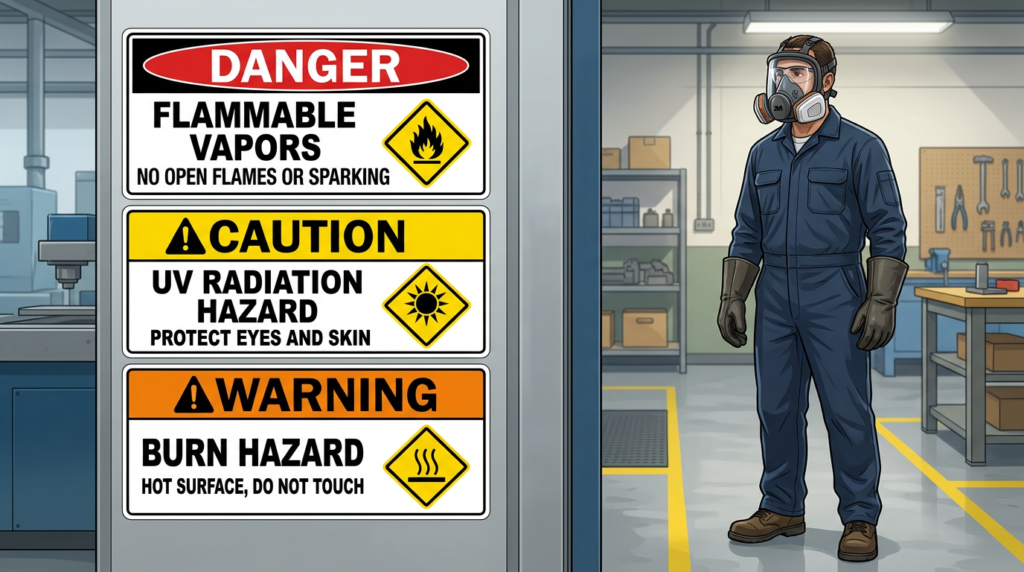
| UV-cure adhesives | UV radiation hazard from cure lamps; photoinitiator skin sensitization |
| Solvent-based adhesives and primers | Flammable vapor; narcotic effects at elevated concentration; explosion risk in enclosed spaces |
| Hot melt adhesive | Thermal burn hazard from molten material contact; low chemical toxicity |
| Heated supply lines and applicator heads | Burn hazard from surface contact; pressurized molten material release risk |
| Purge waste and mixed 2K material | Mixed epoxy and PUR waste generates heat during cure; disposal classification varies by chemistry |
3.How It Works: Hazard-by-Hazard Breakdown
Two-Part Epoxies: Sensitization Is the Primary Risk
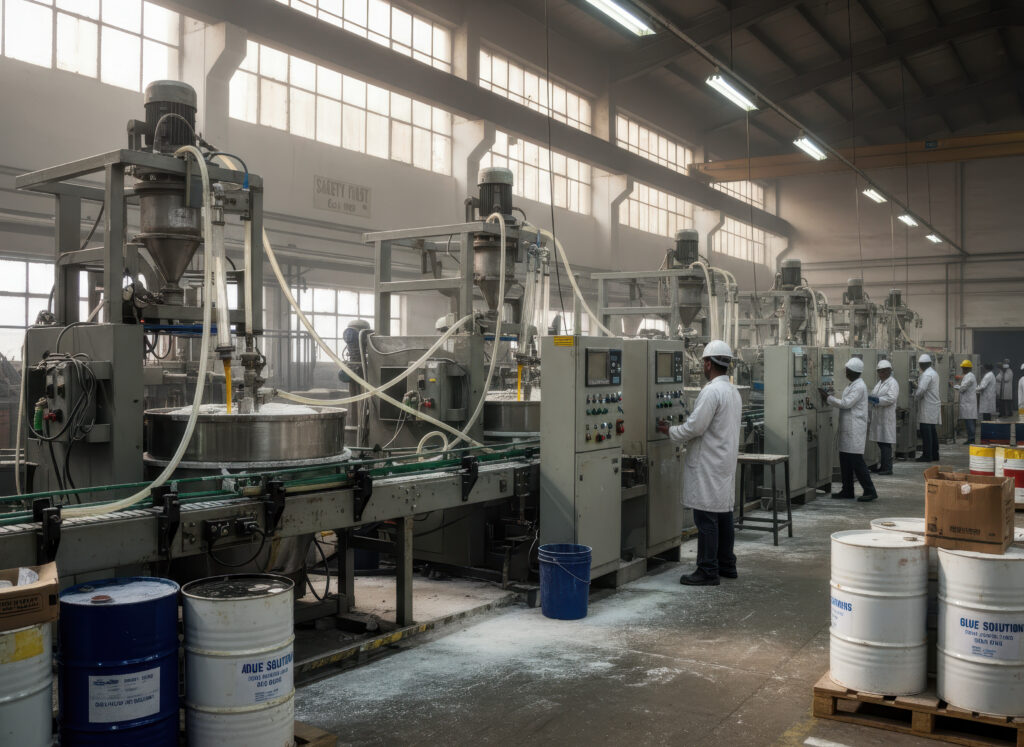
The hazard profile of two-part epoxy systems used for structural bonding and potting shifts significantly between the components and the cured material. Cured epoxy is largely inert. Uncured epoxy resin and amine hardeners are skin and respiratory sensitizers that can trigger occupational contact dermatitis and occupational asthma with repeated exposure. Once sensitized, an individual may react to trace levels that would not affect an unsensitized person.
Amine hardeners carry the higher risk of the two components. Many are classified as corrosive at high concentration and cause severe skin burns on prolonged contact. OSHA’s General Industry standards require chemical-specific PPE where skin or respiratory exposure to amine hardeners is possible. In practice, this means nitrile gloves of adequate thickness, chemical splash goggles rather than safety glasses, and a lab coat or chemical-resistant apron when handling open containers or performing maintenance involving uncured hardener.
For dispensing cells where mixing occurs at the nozzle and the mixed material is enclosed from mixing point to substrate, routine production typically involves minimal direct material contact. The exposure risk concentrates at maintenance tasks: replacing static mixers, cleaning supply line fittings, and responding to leaks or jams. These tasks require the full PPE protocol even when the dispensing process itself does not. Establish the PPE requirement at the task level rather than at the material level alone.
Ventilation requirements for epoxy dispensing cells depend on the dispensing method. Bead dispensing at low temperatures produces minimal airborne material. Spray applications and heated 2K systems produce aerosol and vapor that require local exhaust ventilation at the dispense point. The ACGIH Industrial Ventilation manual recommends capture velocities of 0.5 to 1.0 meters per second at the emission source for adhesive spray operations. Consult the material’s Safety Data Sheet Section 8 for the specific occupational exposure limit and ventilation requirement before designing the cell enclosure.
Isocyanate-Containing Materials: The Hardest Line in Dispensing Safety
Isocyanates are present in polyurethane adhesives, PUR reactive hot melt, and some two-part structural systems. They are among the leading causes of occupational asthma in manufacturing environments. Critically, isocyanate sensitization is irreversible. A worker sensitized through overexposure cannot return to isocyanate-exposed work without risk of severe asthmatic reaction even at very low concentrations. There is no safe re-exposure level after sensitization occurs.
OSHA’s isocyanate standard sets a ceiling limit of 0.02 ppm for common diisocyanates. Many operations handling isocyanate materials in enclosed dispensing cells maintain concentrations well below this limit under normal production. However, maintenance tasks, line purging, and material changeover create exposure opportunities that routine production does not. Every person who enters a dispensing cell or performs maintenance on equipment that has contacted isocyanate materials must receive isocyanate-specific training before that exposure occurs.
Respiratory protection for isocyanate maintenance work requires a supplied-air respirator or a combination air-purifying respirator with organic vapor plus P100 cartridges when air monitoring confirms concentrations are below IDLH levels. Half-face disposable respirators are not adequate for isocyanate work. Beyond respiratory protection, disposable coveralls, chemical-resistant gloves, and face shield protection are required for any task involving open isocyanate-containing material.
For PUR reactive hot melt automation specifically, the thermal processing of the material releases isocyanate vapor above the melt temperature. Nordson and Robatech both publish application guidance recommending local exhaust ventilation at the applicator head for PUR hot melt systems. Design this ventilation into the cell rather than adding it after the first air monitoring result shows elevated isocyanate levels.
UV-Cure Adhesives: Radiation and Photoinitiator Hazards
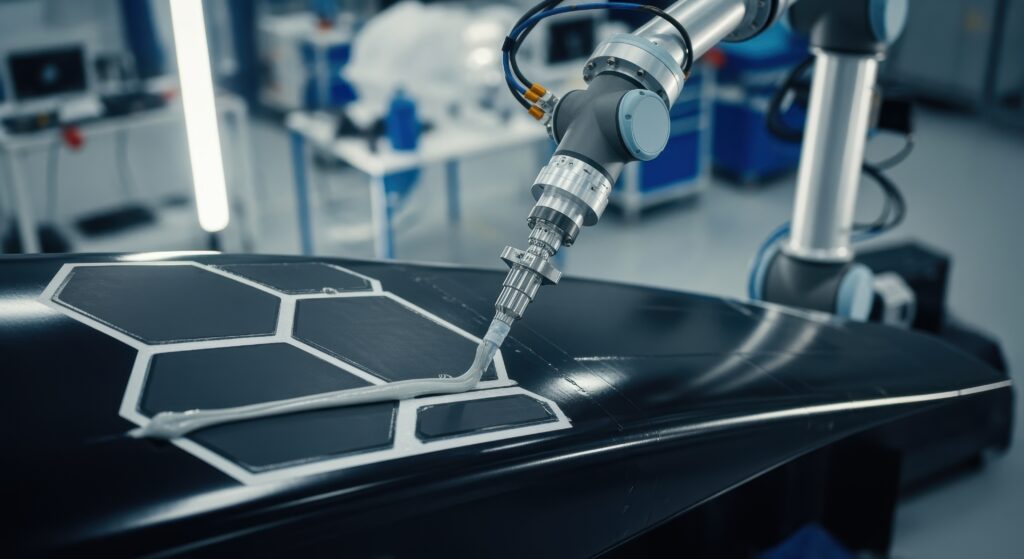
UV-cure adhesives present two distinct hazard categories. First, the UV lamps or LED arrays used to cure the material emit UV radiation that causes severe eye damage and skin burns on direct exposure. UV-A and UV-B wavelengths at production cure intensities, typically 1 to 10 W/cm², damage the cornea and lens and are cumulatively carcinogenic to skin. Cell design must incorporate interlocks that prevent UV lamp activation when the cell enclosure is open and shielding that prevents UV escape at any access point.
Second, the uncured adhesive contains photoinitiators that are skin sensitizers. Repeated skin contact with uncured UV adhesive can produce allergic contact dermatitis that persists and worsens with subsequent exposures. Dymax and Henkel Loctite both publish SDS documentation specifying nitrile glove requirements for handling their UV-cure formulations. Operators who handle UV-cure materials during setup, maintenance, and material loading need glove and eye protection even before the lamp activates.
Solvent-Based Materials: Explosion Classification First
Solvent-based adhesives and primers present flammable vapor hazards that require electrical classification of the dispensing environment before any equipment is installed. The National Electrical Code (NEC) and NFPA 33 govern spray finishing operations and solvent-containing adhesive applications. When solvent concentrations can reach 25% of the Lower Explosive Limit (LEL) in any area of the cell, that area requires Class I Division 1 or Division 2 electrical equipment rated for the specific solvent family.
This classification requirement affects every electrical component in the cell: motors, sensors, solenoid valves, control panels, and lighting. Installing standard industrial electrical equipment in a solvent-classified area creates an ignition source that has caused fatal explosions in manufacturing facilities. Confirm the area classification determination with a qualified industrial hygienist or safety professional before specifying any equipment for solvent-adhesive dispensing cells.
Ventilation for solvent operations targets maintaining vapor concentration below 25% LEL throughout the work area. NFPA 33 specifies minimum air change rates for spray finishing operations that serve as a baseline for solvent adhesive applications. Local exhaust at the dispense point supplements general ventilation and reduces solvent vapor concentration at the operator breathing zone during material handling and maintenance.
4.Common Failure Modes and Constraints
| Hazard | Common Gap | Consequence |
|---|---|---|
| Amine hardener skin contact during maintenance | PPE protocol applies to production only; maintenance tasks not covered | Contact dermatitis or sensitization from unprotected mixer replacement or leak response |
| Isocyanate vapor during PUR hot melt application | No local exhaust at applicator head; ventilation designed for cold adhesive only | Chronic low-level isocyanate exposure during production; sensitization risk over time |
| UV radiation escape at cell access points | Interlocks present but shielding gaps at cable entry or panel seams | Operator UV exposure during adjacent work; eye injury from reflected UV |
| Solvent vapor accumulation in enclosed cabinet | Electrical equipment not rated for solvent atmosphere; cabinet ventilation inadequate | Explosion or fire risk from accumulated vapor contacting non-rated electrical components |
| Mixed epoxy waste disposal | Mixed material placed in standard waste stream; exothermic cure in waste container | Fire or container failure from exothermic reaction in sealed waste bag or drum |
Mixed epoxy waste disposal deserves specific attention. Mixed two-part epoxy continues curing after disposal. In sealed containers, the exotherm from a large quantity of mixed material generates enough heat to cause fire or container rupture. Dispose of mixed epoxy waste in open, metal containers until the cure reaction is complete. Never seal mixed epoxy waste in plastic bags or drums immediately after disposal.
For a fuller comparison of the operational burden 2K systems carry relative to single-component chemistries, see our breakdown of one-part versus two-part adhesive systems.
5.Safety Investments with Dispensing
Where safety infrastructure investment pays back immediately:
Cell design decisions made before installation cost a fraction of what retrofitting costs after the first exposure incident or regulatory inspection. Local exhaust ventilation, UV interlocks, explosion-proof electrical classification, and task-specific PPE protocols all cost less when designed in than when added after. Beyond cost, a sensitization event is irreversible. No retrofit resolves the harm to the affected worker.
Where operations most commonly underinvest:
Maintenance task hazard analysis is the most consistently underdeveloped element of dispensing cell safety programs. Production task hazards are assessed during cell design. Maintenance tasks, which involve more direct material contact and often occur under time pressure, are frequently covered only by generic lockout-tagout procedures rather than chemical-specific PPE and ventilation requirements for the specific materials in the cell.
6.Key Questions Before Committing
- For every material in the dispensing cell, has the SDS Section 8 been reviewed for occupational exposure limits, required engineering controls, and PPE requirements, and have those requirements been incorporated into the cell design specification?
- For isocyanate-containing materials, has isocyanate-specific training been developed and scheduled for every person who will operate or maintain the cell before first production begins?
- For UV-cure cells, have interlocks and shielding been verified to prevent UV exposure at all access points including cable entries, panel seams, and maintenance access doors?
- For solvent-based materials, has a qualified professional performed the area classification determination under NEC and NFPA 33, and does every electrical component in the cell carry the correct hazardous location rating for that classification?
- Has a task-level hazard analysis been completed for maintenance tasks including mixer replacement, supply line disconnection, pump disassembly, and jam clearance, with chemical-specific PPE specified for each task?
7.How RBTX Learn Recommends Using This Information
RBTX Learn recommends treating the SDS review as the first engineering document in any dispensing cell project rather than a document filed after the cell is operational. Material hazards determine ventilation requirements, electrical classification, PPE specifications, and training requirements. All of these influence cell design, enclosure design, and capital cost. Discovering a solvent classification requirement or an isocyanate ventilation requirement after the cell is installed produces expensive retrofits and potential regulatory exposure.
For isocyanate materials specifically, pre-employment health screening for lung function and ongoing surveillance spirometry for exposed workers are best practice recommendations from OSHA and the American College of Occupational and Environmental Medicine. These programs do not prevent sensitization, but they detect early functional changes that allow intervention before irreversible disease develops. Implement them before the first production shift rather than after the first workers’ compensation claim.