
New rules, same question: does your factory actually need a humanoid?
The humanoid robot has been the star of every automation headline this year. This week the story shifted. The United States moved to restrict imports of new foreign-made humanoid robots on national-security grounds. With roughly 90% of the world’s humanoids built in China, the main country targeted by this legislation, the news traveled fast.
A lot of engineers and purchasers are now asking the same thing: what does this mean for the humanoid platforms that made it possible to get hands-on experience with this emerging technology? It is a fair question. While many of these robots were not yet ready for production deployment, they gave engineers a practical way to learn, experiment, and better understand where humanoids might fit in future automation strategies. The more important question is: how can the industry continue building that knowledge as access to some of these platforms changes?
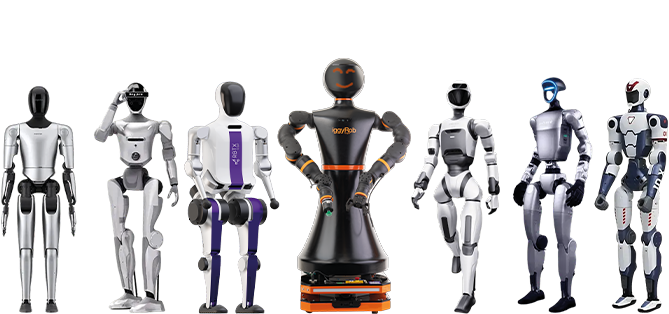
Start with the application, not the robot
The excitement is easy to understand. The global humanoid market was worth roughly $4.9 billion in 2025 and is growing quickly, and a machine that walks, sees, and handles human tools is a real feat of engineering. But excitement is not a specification. The question that decides an automation project is narrower and far less glamorous: what motion does this task actually require, and what is the simplest, most reliable way to produce it?
Look at what is already running on factory floors, and the picture gets clear fast. The International Federation of Robotics counts more than 4.6 million industrial robots in operation worldwide, with 542,000 installed in 2024 alone. Only about 13,000 humanoids shipped globally in 2025 by comparison. Proven, purpose-built machines outnumber humanoids by more than a hundred to one, and they hold that lead on cost, reliability, and cycle time. The humanoid is the newcomer being asked to justify itself against equipment that already works.
Was a humanoid ever the right tool for the job?
A humanoid robot is built to do a little of everything, which is close to the wrong specification for most factory work. Production tasks tend to be narrow and repetitive: move a part from A to B, place it, dispense a bead, inspect a seam, tend a machine. A two-legged robot that can climb stairs and open doors pays for that flexibility. The cost shows up in price, power draw, safety engineering, and control software — all of it barely used while the robot places the same part ten thousand times. Match the machine to the motion the job actually needs, and most of that humanoid complexity turns into overhead you never recover.
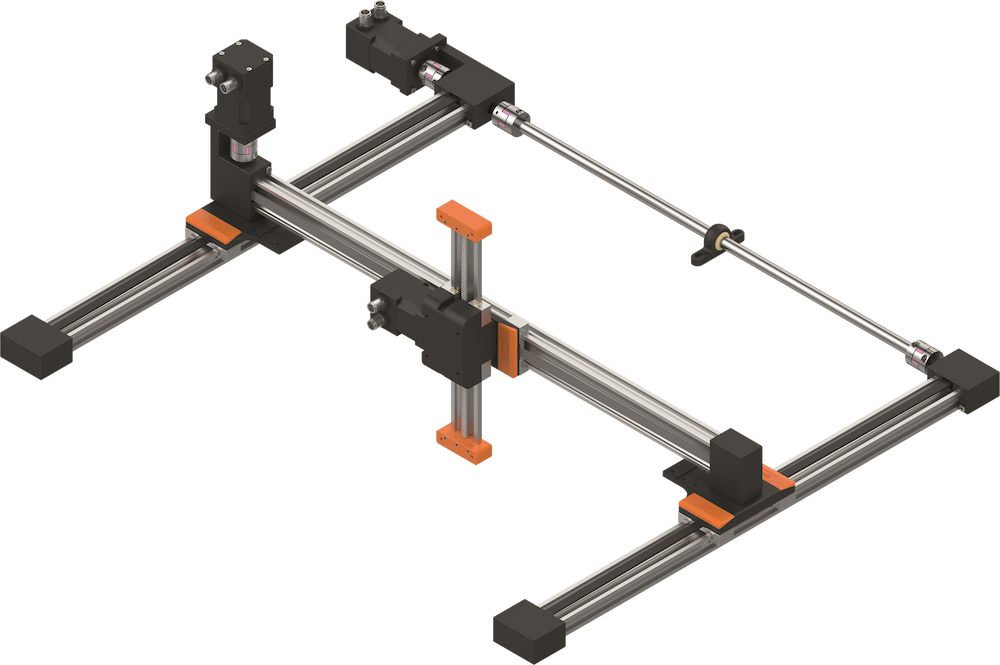
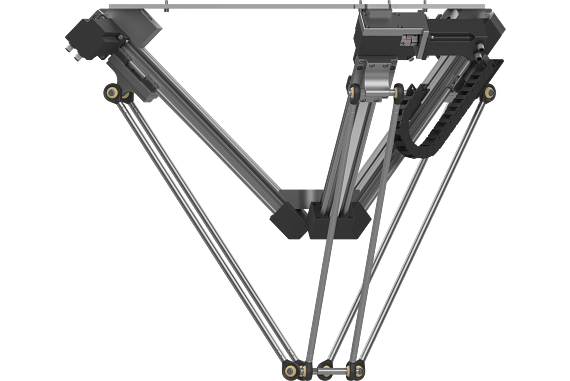
Purpose-built motion flips the trade-off. A gantry that only travels in X, Y, and Z has fewer ways to fail, a smaller safety envelope, and a control scheme a maintenance team can actually reason about. A linear actuator sized to a known load and stroke repeats that move for years — no balance sensors or articulated joints required. Too much machine is as costly as too little, since an oversized, general-purpose robot ties up budget and floor space a lean, task-specific cell would use better. For a fixed, repeatable job, the simpler machine is usually the faster and cheaper one.
The proven technology that is ready today
The technologies that do the bulk of real automation work are proven, available now, and usually cheaper than a humanoid. Here are the building blocks most applications actually call for — each matched to the kind of task a humanoid tends to be over-specified for.
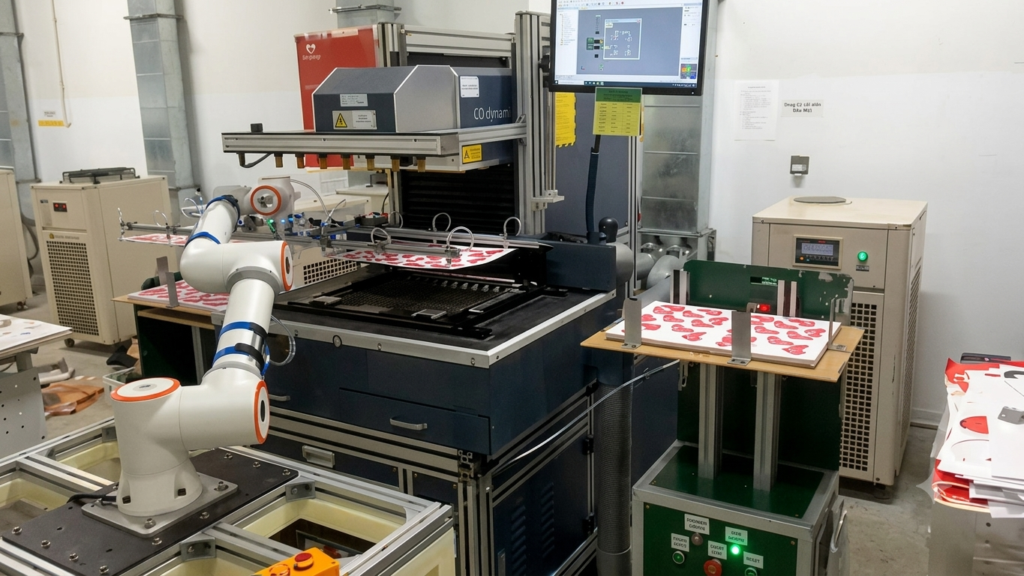
- Cobots (collaborative robot arms): When a task genuinely needs an articulated arm near people — machine tending, light assembly, inspection — a compact cobot such as ReBeL® gives you reach and flexibility without the price or safety load of a humanoid.
- Gantry systems: Two or three linear actuators combine into an XY or XYZ gantry robot for pick-and-place, palletizing, and dispensing across a defined work area. This is the workhorse for the flat, structured motion most production lines run on.
- SCARA and delta robots: For fast horizontal placement or high-speed picking off a moving conveyor, a SCARA arm or delta picker holds cycle times a humanoid cannot approach on a fixed, repeating task.
- Linear actuators: A guide, a lead screw, a motor, and a motor controller combine into a single-axis unit for precise, repeatable moves such as feeding and positioning. Self-lubricating polymer parts let the assembly run without added grease or a relubrication schedule.
- Complete automation cells: Standardized building blocks assemble into a full working cell — the complete system many teams actually want when they say they need “a robot” — for a fraction of a humanoid’s price.
Humanoids can handle plenty of tasks. The catch is that most of those tasks are jobs a purpose-built machine already does well, and does for far less. Put real prices side by side and the gap is hard to ignore.
Across the priced humanoid robots on the RBTX marketplace, the average cost comes to roughly $94,000. Compare that with a complete pick-and-place solution on the same marketplace: a Fairino FR5 collaborative robot — which lists at about $7,499 — fitted with a Schmalz vacuum gripper kit and cobot cable management, configured to load a fixture, place a part, and clear the finished piece on a repeating cycle. Even with the gripper and cabling added, the whole cell lands at just $8,929.29, a fraction of the average humanoid price — in fact, less than a tenth of the price. It is the same pick-and-place motion a humanoid is so often pitched for, handled by proven, purpose-built parts for a fraction of the cost.
Choosing automation you will not regret
Whatever you pick, favor building blocks over monoliths. A cell assembled from standard guides, actuators, motors, and controllers can be re-sized, re-purposed, or repaired one part at a time. A single sealed platform offers none of that room — when one piece is unavailable or unsupported, the whole machine waits. Designing at the part level keeps a line adaptable long after the purchase order is signed.
Reliability is the other half of a sound investment. Self-lubricating bearings and lead screws remove the grease points and relubrication intervals that quietly drive unplanned downtime. Lubrication gaps account for about 11% of all unplanned stoppages, and analysts call them the most preventable failure category of all. A self-lubricating design removes that category at the source. Maintenance-free motion costs less to run, and it takes one more variable out of a system you want to forget about once it is working.
Navigating the change with RBTX
No one working through this shift has a complete map yet, and that includes us. RBTX exists to make automation approachable, regardless of experience or skill. Right now that means helping engineers, purchasers, and integrators find the right technology for a real project — not fitting a humanoid to a problem that never needed one. The marketplace brings robot arms, linear robots, gantry building blocks, motors, and controllers from a range of suppliers into one place, so you can compare purpose-built options against the task and the budget. When the headlines move on, the value of a marketplace is that it still shows you the options that fit.
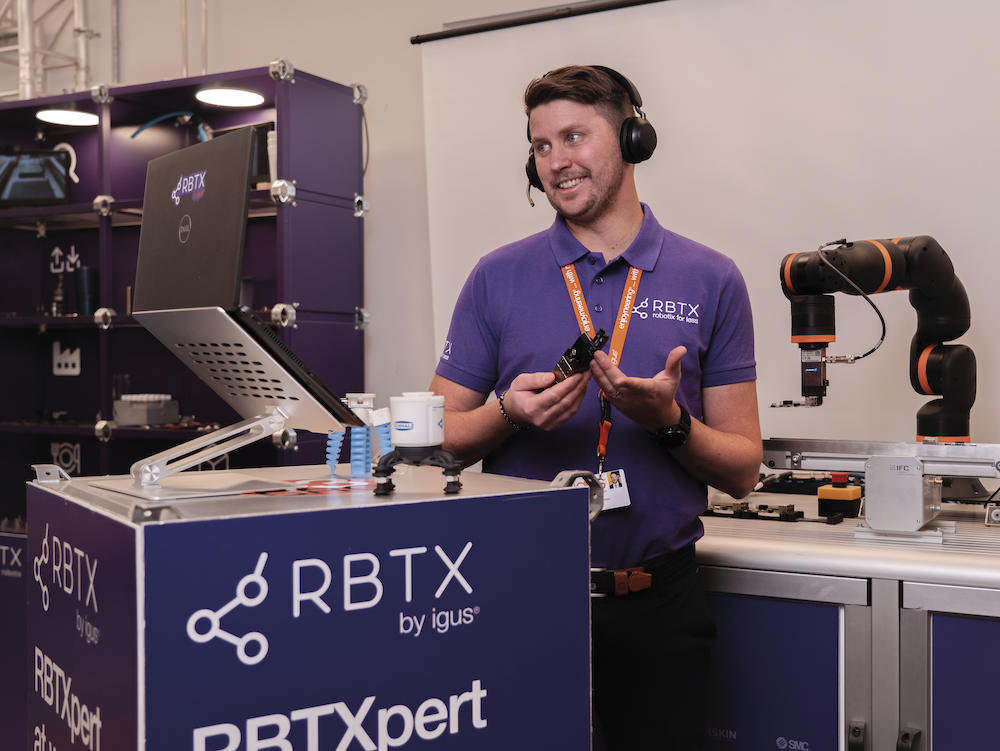
For the motion itself, igus® builds purpose-built alternatives designed to run maintenance-free. drylin® linear guides and actuators, iglide® bearings, and dryspin® lead screws carry loads without grease. The ReBeL cobot handles the jobs that truly need an arm, and the dryve D1 motor controller runs the motion. If you are not sure which configuration fits the job you had in mind, the point of talking to us is to size the right system before budget goes to the wrong one. The goal is the same as it always was: the simplest machine that does the job, matched to the application.
If a humanoid was on your roadmap, this is a good moment to reassess the whole approach — not just swap one machine for another. Bring the task, and we will help you find the motion that moves it.
Frequently Asked Questions
Yes — for genuinely general-purpose, frequently changing tasks in spaces built around people. Most production work is fixed and repetitive, though, and there a purpose-built machine wins on cost, reliability, and cycle time.
A gantry robot for structured moves across an area, or a SCARA or delta robot when speed is the priority. All three are proven, fast, and far cheaper than a humanoid.
A cobot suits variable, lower-volume tasks that need an articulated arm near people. A gantry suits fast, repeatable motion across a defined footprint. The load, reach, and cycle time point to one or the other.
Rarely. A complete cell built from modular, low-cost parts delivers a full working system for a fraction of the price, and it is easier to service.
Far less. The priced humanoid robots on the RBTX marketplace average roughly $94,000, while a complete pick-and-place cell built around a collaborative robot arm can come in under a tenth of that. For a fixed, repeating task, the purpose-built cell delivers the same motion for a fraction of the price.
Adapt. A humanoid is built for general-purpose, changeable work in spaces designed around people — climbing stairs, opening doors, switching between loosely defined tasks. If your job is fixed and repetitive, though, that adaptability becomes overhead you pay for and rarely use.
Yes, when it is built from proven parts. Self-lubricating bearings and lead screws remove the grease points and relubrication intervals that drive much of the unplanned downtime on a line, so a well-specified low-cost cell can run for years with little attention. Reliability comes from matching the parts to the load and duty cycle, not from spending more.
Start with the task, not the robot. Define the motion, load, and cycle time, then match the simplest technology that meets them. RBTX can help you spec it.